

The Lamb of Passover & The Messiah
From the beginning, God protected mankind by providing a covering in Eden, showing that true protection comes from Him (Genesis 3:21). He delivered Israel when they were in slavery in Egypt; the Israelites were protected by the mark of the lamb’s blood on their doors, and the angel of death passed over them. In this article, we will see how, from the beginning, God prepared the Lamb of Passover and the Messiah for the salvation of mankind. Moreover, He is the Creator, the Savior, and the Provider.
Patriarchs’ Journey Through the Holy Scriptures of Torah
From the earliest chapters of the Torah, a clear pattern emerges: covering, sacrifice, deliverance, and promise. This pattern unfolds through the patriarchs and the prophets, revealing God’s ongoing relationship with humanity.
1. The First Covering – Eden (Bereshit – Genesis 3:21)
God’s Protective Covering for Adam and Eve
After Adam and Eve disobeyed, God still protected them and provided a covering for their shame. The Scripture says:
“The LORD God made garments of skin for Adam and his wife and clothed them.” (Genesis 3:21)
Although humanity tried to cover its own shame with fig leaves, relying on their own understanding, God provided the true covering Himself. Notably, the text does not name the animal used, but it introduces a key principle: genuine covering comes from God, not from human effort.
The First Promise of Victory (Genesis 3:15)
This moment also points forward to an earlier promise:
“And I will put enmity between you and the woman, and between your offspring and hers; he will crush your head, and you will strike his heel.” (Genesis 3:15)
Here, God signals the expectation of a future victory over evil. This verse foretells the coming of the “seed of the woman”—the Messiah, who would be born as a human. He would ultimately crush the head of the old serpent, defeating evil and offering salvation to humanity.
At the same time, the prophecy warns that the serpent will strike His heel, indicating the suffering the Messiah will endure in his first victory before the final victory as a ruler and the King of kings.
2. Abel’s Offering – The First Accepted Sacrifice (Bereshit- Genesis 4:4)
Abel brought the firstborn of his flock, and the LORD accepted his offering. In contrast, God did not accept Cain’s offering because Cain did not offer it sincerely.
Thus, Abel’s sacrifice demonstrates that God values offerings given in the right spirit. Therefore, true acceptance depends on the heart behind the act, not merely the act itself.
3. Noah – Sacrifice After Deliverance (Genesis 8:20–21)
After the flood, Noah responded to God’s deliverance with joy. He built an altar and offered burnt offerings:
“Noah built an altar to the LORD… and offered burnt offerings.”
In response, God said:
“The LORD smelled the pleasing aroma…”
This episode of Holy Scripture reveals a recurring pattern: after judgment and deliverance, sacrifice reflects restored relationship between God and humanity. Furthermore, it shows that gratitude and worship naturally follow God’s mercy.
4. Abraham and Isaac – “God Will Provide The Lamb” (Bereshit-Genesis 22)
One of the most central passages in the Torah occurs when Abraham is asked to offer his son, Isaac.
Isaac asked:
“Where is the lamb for a burnt offering?”
Abraham replied confidently:
“God will provide for Himself the lamb…” (Genesis 22:8)
At the decisive moment, God provided a ram in place of Isaac (Genesis 22:13). Consequently, the location was named:
“The LORD will provide” (Adonai Yireh / YAHWEH YIREH)
This passage establishes a lasting principle: God Himself provides what is needed. To save the promised son, the generation of Abraham, God supplied the lamb, offering it in place of Isaac. Furthermore, this act foreshadows the coming Messiah, who fulfills God’s promise of salvation and redeems everyone who belongs to Abraham’s spiritual family through faith.
5. The Passover Lamb – National Redemption (Shemot- Exodus 12)
God’s Deliverance Expands in Egypt
In Egypt, God’s pattern of deliverance expanded—from an individual to a family, and then to the entire nation of Israel. God instructed:
“Then Moses summoned all the elders of Israel and said to them, ‘Go at once and select the animals for your families and slaughter the Passover lamb. Take a bunch of hyssop, dip it into the blood in the basin, and put some of the blood on the top and both sides of the doorframe. None of you shall go out of the door of your house until morning. When the Lord goes through the land to strike down the Egyptians, he will see the blood on the top and sides of the doorframe and will pass over that doorway, and he will not permit the destroyer to enter your houses and strike you down. Obey these instructions as a lasting ordinance for you and your descendants. When you enter the land that the Lord will give you as he promised, observe this ceremony. And when your children ask you, ‘What does this ceremony mean to you?’ then tell them, ‘It is the Passover sacrifice to the Lord, who passed over the houses of the Israelites in Egypt and spared our homes when he struck down the Egyptians.’’ Then the people bowed down and worshiped.” (Exodus 12:21–27)
Salvation Through the Blood of the Lamb
Passover is not merely a tradition; it is the Feast of the Lord (Pesach of God), established by divine command. God saved the Israelites from slavery under the oppressive Egyptian rulers through the blood of the lamb. These rulers had previously killed Hebrew male children from the generation of Jacob, but God executed justice. He sent ten plagues upon Egypt to display His power and sovereignty. Finally, the angel of God, Yahweh, struck down the firstborn of the cruel Egyptians while sparing the firstborn of Israel, including all their children and even their animals.
Obedience and Memorial of Freedom
Alongside this act of salvation, God commanded the Israelites:
“You shall eat unleavened bread…” (Exodus 12:15)
This instruction symbolized separation from their past oppression and a new beginning in freedom. Moreover, God established this day as a memorial: the Israelites were to remember their deliverance annually by celebrating this day and offering the lamb in sacrifice.
God’s Provision, Not Human Effort
Israel’s salvation did not depend on human strength or effort. Instead, it relied on obedience to God’s instructions, trust in His provision, and the blood of the lamb. The blood became both a sign of protection and a foreshadowing of the ultimate Lamb who would bring salvation to all.
6. The Promise of Judah – The Coming Ruler (Genesis 49:9–10)
Jacob’s Prophecy of Judah
“You are a lion’s cub, Judah;
you return from the prey, my son.
Like a lion he crouches and lies down,
like a lioness, who dares to rouse him?
The scepter will not depart from Judah,
nor the ruler’s staff from between his feet,
until he to whom it belongs shall come
and the obedience of the nations shall be his.”
This prophecy introduces two key expectations:
- A ruler from the tribe of Judah
- A figure to whom all nations will gather
Currently, Israel primarily envisions the Messiah as a ruler. However, His mission extends far beyond political leadership. Ultimately, all nations will recognize His authority and obey Him. Moreover, the Messiah’s role includes the spiritual salvation of Israel as the Holy Lamb, whose eternal sacrifice fulfills God’s prophetic plan for all nations as well.
Connection to Abraham’s Prophecy
This divine plan traces back to Abraham’s prophecy: God Himself provided a lamb to save the promised son. In the same way, to redeem Israel and the nations spiritually, God offers the ultimate Lamb. Through this sacrifice, all nations are drawn to obedience and faith in Him.
Later Prophets Expand the Picture
The later prophets clarify the dual nature of the Messiah’s mission:
- Isaiah 53 “Like a lamb that is led to the slaughter… He bore the sin of many…”
- Yirmiyahu Jeremiah 23:5: “I will raise up for David a righteous Branch…”
- Zechariah 9:9 “Your king is coming… humble and riding on a donkey…”
- Zechariah 12:10 “They will look on Me whom they have pierced…”
These passages reveal a figure who embodies both suffering and kingship. He must suffer as the Lamb, the Righteous Branch, and the humble King, while the people who pierced Him will recognize His significance. At the same time, He is the reigning King who establishes universal peace.
Two Complementary Dimensions of the Messiah
Within Scripture, we observe two complementary aspects of the Messiah’s mission:
- Suffering and redemption – the suffering servant (Isaiah 53)
- Kingship and universal peace – the reigning King (Genesis 49; Zechariah)
Together, these dimensions present a Messiah who suffers for humanity’s salvation while ruling over all nations with righteousness and authority.
Fulfillment – After 700 Years – Matthew 27:27-31
Matthew, was a Jew who worked as a tax collector for the Romans in Capernaum before becoming one of twelve apostles. He wrote the first Gospel, which many consider the most “Jewish” of the four, emphasizing Yeshua as the promised Messiah for both the Jewish people and all nations.
“Then the governor’s soldiers took Jesus into the Praetorium and gathered the whole company of soldiers around him. They stripped him and put a scarlet robe on him, and then twisted together a crown of thorns and set it on his head. They put a staff in his right hand. Then they knelt in front of him and mocked him. “Hail, king of the Jews!” they said. They spit on him, and took the staff and struck him on the head again and again. After they had mocked him, they took off the robe and put his own clothes on him. Then they led him away to crucify him.” Matthew 27:27-31
The Messiah fulfills the prophecy in Genesis 3:15 as the promised Seed of the Woman.He is the Lamb provided by God, born in the tribe of Judah (Genesis 22:8,13). The genealogy of Yeshua—known as Jesus in English—confirms this lineage. Yeshua’s birth, life, and mission fulfilled the prophecies, as recognized by His disciples, early believers, and present-day Messianic Jews.
He came first to Israel to provide spiritual salvation, acting as the Holy Lamb whose sacrifice redeems both Israel and the nations (Genesis 49:9-10; Exodus 12). This sacrifice serves as the eternal offering promised in Scripture (Psalm 110:4; Isaiah 53) and ultimately leads to global recognition and obedience, where all nations acknowledge His authority (Isaiah 2:2–4; Revelation 15:4; Genesis 49:10).
Other Prophecies of Jew Prophets:
The Messiah lived 33 years on earth as a human, fully experiencing life while remaining without sin. His life, death, and resurrection from the dead fulfilled numerous prophecies recorded in Scripture and now again he is coming to fullfill the remaining prophecies as He is coming as the King of Kings.
On 10th of Nisan, He entered Jerusalem, riding a donkey, fulfilling Zechariah 9:9, which foretold the Messiah’s humble arrival as King. This prophecy is fulfilled in Matthew 21:1-11: During the Passover, He was crucified, fulfilling many prophecies:
- As the Lamb of God (Genesis 22:8, 13; Exodus 12), His sacrifice redeemed humanity on 14th of Nisan
- Suffering and rejection (Isaiah 53; Psalm 22), He was despised, mocked, and pierced. Fullfilled in Matthew 27:27-31 All of the disciples were Jews who wrote gospel and letters to early believers.
- Betrayed for thirty pieces of silver (Zechariah 11:12–13; Matthew 26:15), aligning with the prophecy of the price of a shepherd.
- Silent before His accusers (Isaiah 53:7), He did not defend Himself.
- Crucified with criminals (Isaiah 53:12; Luke 23:32–33). Luke the author of the gospel of Luke, was a Hellenistic Jew. John 19:18, 32-33 The Author of John Yohanan/John was born in Galilee, a northern region of Israel, to Jewish parents, Zebedee and Salome. His Hebrew name was Yohanan. He was of the tribe of Levi through his father and the tribe of Judah through his mother.
- Piercing of hands and feet (Psalm 22:16), fulfilled in the crucifixion in John 20:24-29.
- Mocked and insulted (Psalm 22:7–8).
- Not a bone broken (Psalm 34:20-21; John 19:36).
- Buried with the rich (Isaiah 53:9; Matthew 27:57–60).
The Truth of the Gospel Confirmed by Modern Science
The sacrifice of the Holy Lamb of God, the Messiah, His sacrifice for humanity is traditionally dated to the 14th of Nisan, corresponding to April 3, 33 AD. The Gospels, written by the Jewish apostles of Jesus (Matthew 27:45, Mark 15:33, Luke 23:44), describe how a supernatural darkness covered the land for three hours, from noon (the sixth hour) until 3 p.m. (the ninth hour), during the crucifixion.
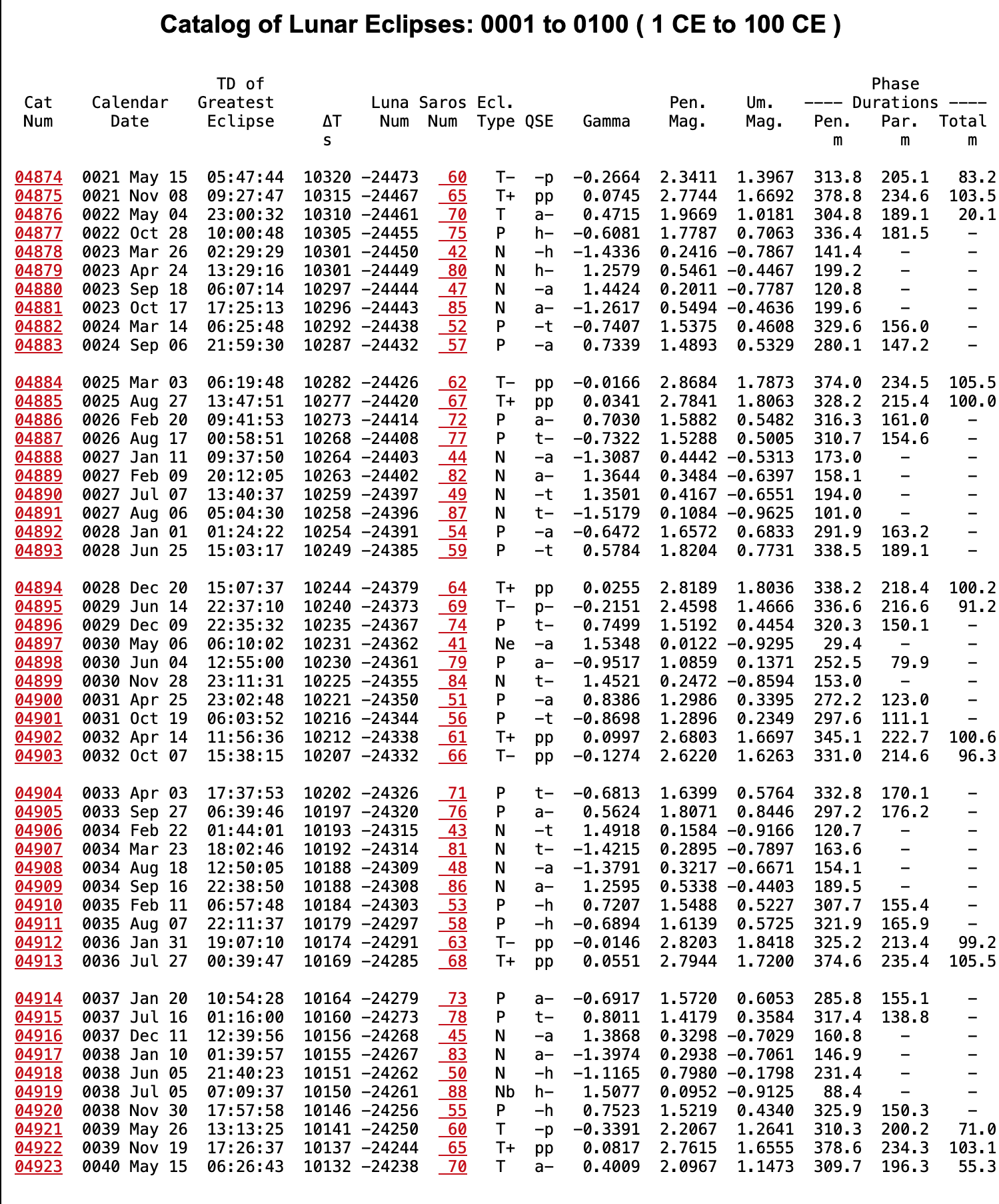
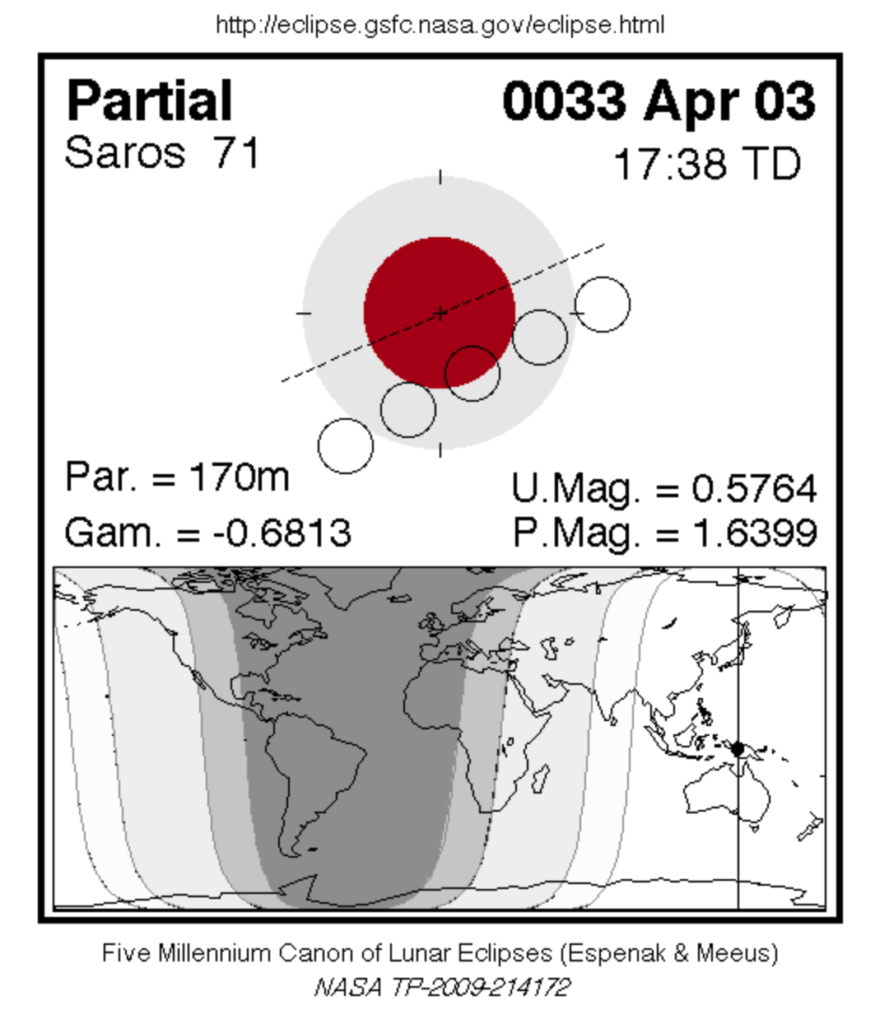
Modern astronomical research, including data from NASA’s eclipse catalog, indicates that a partial lunar eclipse occurred on Friday, April 3, 33 AD. Many scholars associate this phenomenon, often referred to as a “blood moon,” with the biblical descriptions surrounding the time of the crucifixion. This record is documented in the Five Millennium Catalog of Lunar Eclipses, offering a compelling point of connection between the Gospel narrative and scientific observation.
Resurrection of The Messiah:
On the third day, the 16th of Nisan, God raised the Messiah from the dead. This event coincided with the Feast of First Fruits (Leviticus 23:10–11), fulfilling the typology of the firstborn and offering eternal life to all who believe.
Psalm 68:18, attributed to King David, foretold His victory: after His resurrection, the Messiah preached deliverance to the spiritual realm, freed those held captive by death, and ascended to heaven, clearly demonstrating His authority over life and death.
Through His birth, ministry, sacrifice, resurrection, and ascension, the Messiah fulfilled prophecies throughout the Old Testament. He brought salvation first to Israel and extended it to all nations, confirming that He is the promised Holy Lamb and the eternal King.
God’s love for all nations and His plan to bring salvation beyond Israel:
God’s Promise to Abraham (Genesis 12:3)
God says, “I will bless those who bless you. I will curse anyone who curses you. Abraham’s descendants will bless all peoples on earth.” Therefore, this prophecy shows that Abraham’s seed—ultimately Christ—will bless every nation, not only Israel. As a result, God’s plan for global blessing begins with Abraham.
God’s Servant as a Light to the Nations (Isaiah 49:6)
God tells His servant, “You will restore the tribes of Jacob and bring back those of Israel I have preserved. Moreover, I will make you a light for the Gentiles, so my salvation reaches the ends of the earth.” In this way, God emphasizes that His servant’s mission extends far beyond Israel.
Prayer for Global Praise (Psalm 67:2–3)
“May people everywhere know your ways on earth. Let all nations experience your salvation, and let everyone praise you, God!” By phrasing it this way, the psalm envisions universal recognition of God’s glory. Furthermore, it calls believers to actively share His salvation with all nations.
God Calls His Servant to Righteousness (Isaiah 42:6–7)
God declares, “I have called you in righteousness. I will hold your hand, protect you, and make you a covenant for the people. You will shine as a light for the Gentiles, open the eyes of the blind, and free captives from prison.” Consequently, God’s servant actively brings justice, freedom, and spiritual enlightenment to all nations.
Nations Seeking the God of Israel (Zechariah 8:22–23)
“Many peoples and strong nations will come to seek the Lord Almighty in Jerusalem. Ten men from every language and nation will grab one Jew by the hem of his robe and say, ‘Let us go with you, because we have heard that God is with you.’” Therefore, God’s presence among His people will attract nations to seek His guidance and salvation.