
- This event has passed.
Rosh Hashanah – The Feast of Trumpets
The biblical name of this festival is Yom Teruah (“Day of Trumpets”). It marks the beginning of the High Holy Days described in Leviticus 23:23–25. The celebration takes place in early autumn, on the first day of the seventh biblical month. In Jewish tradition, Rosh Hashanah commemorates the creation of Adam and Eve and is regarded as the birthday of the world.
The Festival of Trumpets
Leviticus 23:23–25
The Lord said to Moses, “Say to the Israelites: ‘On the first day of the seventh month you are to have a day of sabbath rest, a sacred assembly commemorated with trumpet blasts. Do no regular work, but present a food offering to the Lord.’”
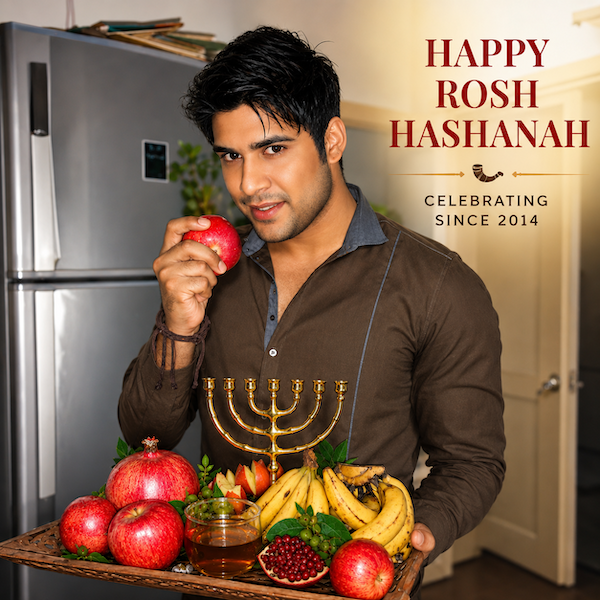
Families celebrate Rosh Hashanah with meaningful traditions that express hope for God’s blessing in the coming year. They often serve round challah bread with raisins and apples dipped in honey to symbolize a sweet year ahead. The festival begins at sundown on the eve of Tishrei 1 and continues through Tishrei 2, the first two days of the Jewish New Year. During the celebration, families light candles, share festive meals, attend prayer services, and listen to the sounding of the shofar (ram’s horn) on both mornings. They also refrain from regular work in keeping with the biblical command.
Sacrifices for Yom Teruah
Numbers 29:1–6 outlines the offerings that Israel presented on Yom Teruah. On this sacred day, the people gathered for worship, rested from their regular work, and sounded the trumpets. They brought a burnt offering consisting of one young bull, one ram, and seven one-year-old male lambs without defect. Each animal had a specific grain offering mixed with olive oil. The people also presented one male goat as a sin offering to make atonement. These sacrifices came in addition to the regular daily and monthly offerings. Together, they formed food offerings that honored the Lord as a pleasing aroma.
BELIEVE IN MESSIAH JESUS
Jesus Christ is the promised Messiah, the One who fulfilled the prophecies of Scripture, fulfilled the ceremonial law as the eternal Lamb of God, and is coming again as King, the King of kings and Lord of lords.
Hundreds of years before the birth of Jesus, the prophet Isaiah described the suffering Messiah in Isaiah 53. Isaiah prophesied that He would be despised and rejected, wounded for our transgressions, crushed for our iniquities, and that through His suffering many would be made righteous.
“He was wounded for our transgressions, he was bruised for our iniquities… and with his stripes we are healed.” — Isaiah 53:5
Jesus fulfilled this prophecy through His life, suffering, crucifixion, and resurrection. He willingly gave Himself for our sins, bearing the punishment that we deserved so that we could receive forgiveness, reconciliation with God, and eternal life.
Isaiah declared:
“He was led as a lamb to the slaughter.” — Isaiah 53:7
Jesus is the Lamb of God who takes away the sin of the world. His death was not the end. He rose again from the dead, demonstrating His victory over sin and death.
But the story does not end at the cross or the empty tomb.
There is a prophetic interpretation that connects the Second Coming of Jesus Christ with the Feast of Trumpets (Yom Teruah/Rosh Hashanah). The New Testament repeatedly associates the gathering of believers and Christ’s return with a trumpet.
Jesus also said:
“And he shall send his angels with a great sound of a trumpet, and they shall gather together his elect…” Matthew 24:31
1 Thessalonians 4:16–17:
“For the Lord himself shall descend from heaven with a shout, with the voice of the archangel, and with the trump of God…”
And 1 Corinthians 15:52:
“…at the last trump: for the trumpet shall sound, and the dead shall be raised incorruptible…”
Jesus is coming again.
The first time He came as the suffering Servant. The next time He will come as the victorious King. He will return in glory, and He will reign as King of kings and Lord of lords.
“KING OF KINGS, AND LORD OF LORDS.” — Revelation 19:16
We believe God speaks to His people in their souls, hearts and to their bodies through His Holy Word. We also know that the shofar (trumpet) will be blown when Jesus, (Matthew 24:31-36) the Messiah of the world, comes again as the King of Kings. (Revelation 19:16). The feast of trumpets is the sign of Messiah’s coming.
The Shofar’s cry…
…proclaims God as King of the world;
Zechariah 9:14 says, “the LORD God shall blow the trumpet.”