
Heritage of Pakistan
Pre-Islamic Civilization of Pakistan
The Cultural Heritage of Pakistan spans centuries, from pre-historic times to the present, and can be summarized in the following periods:
- Indus Civilization (3300BC-1300 BCE)
- Gandhara Civilization (600 BCE – 1100AD)
- During the Gandhara period, the region became a center of Buddhist learning, art, and trade.
- Thomas the Apostle, a disciple of Jesus, is traditionally believed to have arrived in this region around 52 AD, spreading the gospel in the northwestern part of the subcontinent, present-day Pakistan, particularly in the region of Sindh and near modern-day Karachi.
- Islamic Fighters Entered in Sindh (711 AD)
- Muslim Emperors (1200 AD -1653)
- Sikh Period (1799–1849)
- British Period (1600–1947)
- Post-independence Period (1947–present)
Indus Valley Civilization (3300–1300 BCE)
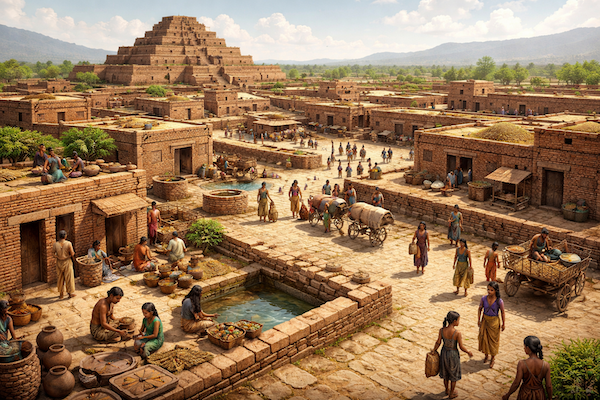
The Indus Valley Civilization (3300BC – 1300 BC), also known as the Harappan Civilization, is one of the oldest civilizations in the world. It is named after Harappa, one of its major archaeological sites, which was first excavated in the 1920s. In British Raaj, Harappa was located in the Punjab province of British India; today it lies in modern-day Pakistan.
The Indus Civilization is considered one of the three major cradles of early civilization in the ancient world, alongside Mesopotamia and Pharaonic Egypt. Among these, the Indus Valley Civilization covered the largest geographical area.
When Abraham is believed to have lived in Mesopotamia, cities of the Indus Valley such as Harappa and Mohenjo-daro were already large, developed urban centers with planned streets, drainage systems, and active trade.
Urban Planning and Technological Advances
The inhabitants of the Indus River Valley developed advanced techniques in handicrafts and metallurgy, producing carnelian jewelry, carved seals, and tools made from copper, bronze, lead, and tin.
Indus cities displayed remarkable urban planning. They featured baked brick houses, sophisticated drainage systems, grid-patterned streets, water supply systems, and large public buildings.
Archaeologists discovered Harappa, followed soon by Mohenjo-daro, marking a major milestone in South Asian archaeology. These discoveries came during excavations that began in 1861 with the establishment of the Archaeological Survey of India under the British Raj.
Taxila – A Center of Ancient Learning
Taxila, located about 40 kilometers from Islamabad, was one of the most important centers of learning and culture in the ancient world. The city flourished for many centuries and served as a crossroads of civilizations.
In the 6th century BCE, Taxila became part of the Achaemenid Persian Empire as a provincial capital (satrapy). Later, in 326 BCE, it was visited by Alexander the Great (Sikandar-e-Azam) during his campaign in the Indian subcontinent.
After several political changes, the region eventually came under the rule of Emperor Ashoka of the Mauryan Empire in the 3rd century BCE. Taxila developed into a major center of education, philosophy, and culture, attracting scholars and students from different parts of Asia.
Gandhara Civilization and Early Christianity (600 BCE – 1100AD)
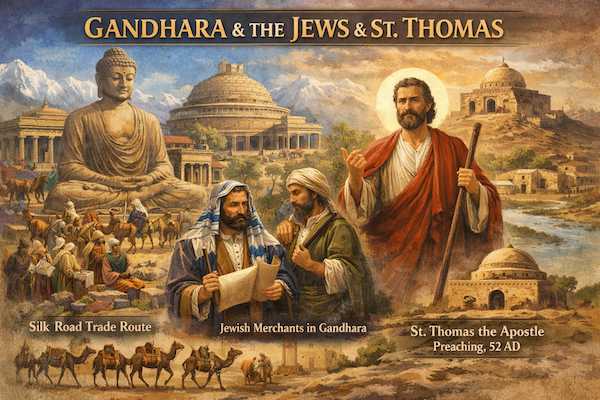
The Gandhara Civilization was an important ancient culture in parts of present-day Pakistan and Afghanistan. It flourished for many centuries and became known for its rich culture, trade, and Buddhist heritage.
During the Gandhara civilization, the region became part of the Persian Achaemenid Empire. Kings such as Xerxes I The Great (485–465 BCE) ruled the empire and ordered the rebuilding of the Jerusalem Temple. Around the same time, the biblical prophet Daniel served in the royal courts of Babylonian and early Persian rulers.
Xerxes The Great, Darius I, and later King Ahasuerus governed Hindustan as a province of their vast empire, which stretched over 127 countries. Decades after Xerxes I, King Ahasuerus married Queen Esther. Mordecai rose to a high rank in the royal court.
Biblical reference:
“Now it came to pass in the days of Ahasuerus, (this is Ahasuerus which reigned, from Hindustan even unto Ethiopia, over an hundred and seven and twenty provinces.” – Esther 1:1
Trade Routes & Cultural Influences
Taxila, Peshawar, and the Swat Valley served as the most important cities of the Gandhara Civilization. Because the region lay along major trade routes, Gandhara absorbed influences from Greek, Persian, and Indian cultures. As a result, these cultural interactions created a unique artistic tradition. In particular, Gandhara artists blended Greek artistic styles with Buddhist themes; consequently, they produced some of the earliest statues of Gautama Buddha.
Moreover, Taxila developed into a famous center of learning where students studied medicine, philosophy, and religion. However, several invasions weakened the civilization over time. Nevertheless, its legacy in art, culture, and education continued to influence later civilizations.
Jewish Communities in Gandhara
Historical records and some traditions suggest that descendants of Jacob (Jewish merchants and settlers) lived in Gandhara, especially along trade routes. They were part of the cosmopolitan mix of Gandhara, which included Buddhists, Hindus, Greeks (from Alexander’s campaigns), Persians, and others. Prophet Daniel (605 BC – 586 BCE) primarily served as a wise advisor to the kings who ruled the Gandhara region.
Mordecai, a Jew living in the Persian Empire during King Ahasuerus’s reign, rose to become the prime minister and second-in-command of the empire (Esther 8:1–2). The region’s location along the Silk Road encouraged diasporic communities, including Jews, to settle there. They contributed to commerce, culture, and religious diversity.
Even after the creation of Pakistan in 1947, small Jewish communities continued to live in the country, particularly in cities such as Karachi and Peshawar. They were involved in trade, business, and cultural life, contributing to the diverse social fabric of Pakistan. However, with the increasing Islamization policies from the late 1970s onward, and the rise of religious extremism, these Jewish families faced social pressures and security concerns. Over time, most of the Jewish population migrated to countries like Israel and the West, marking the end of a centuries-long presence of Jews in the region. Their legacy, however, remains a part of Pakistan’s rich and multicultural history.
Arrival of St. Thomas The Apostle in the Region
During the Gandhara period, the region also emerged as an important center of Buddhist learning, art, and trade, linking cultures from Central Asia, South Asia, and the Mediterranean world. Cities such as Taxila attracted scholars, merchants, and travelers from many regions. According to long-standing Christian tradition, Thomas the Apostle, one of the disciples of Jesus Christ and a Jew, arrived in the northwestern subcontinent around 52 AD. It is believed that he preached the Gospel in areas that now form parts of Sindh, Taxila, and near modern-day Karachi, establishing the first Christian communities in the region.
St. Thomas’s Legacy in Modern Pakistan
He came alone as a Jew scholar and preached the gospel of Messiah to the native people, including Jews, Buddhists, and Hindus. He did not bring an army or swords, nor did he try to make anyone a slave. These early Christian communities promoted love and compassion throughout the region.
Other Jewish scholars, such as Flavius Josephus, and Roman writers like Tacitus, who were not Christians, confirmed that Jesus Christ (Yeshua) was a Jewish man living during the time of Pontius Pilate. They recorded that he was crucified, that he rose from the dead, and that he performed supernatural miracles. He also believed that his followers would transform the Roman world, and history shows that Christianity indeed profoundly shaped Roman society and culture.
Their presence became part of Gandhara’s rich spiritual and cultural heritage and highlights the region’s historical role as a crossroads of civilizations and faiths.
According to long‑held Christian beliefs and local tradition, St. Thomas visited the ancient city of Sirkap near Taxila while traveling across the subcontinent. The Catholic Church of St. Thomas the Apostle opened in the Taxila Cantonment area (Rawalpindi district, Punjab Province), close to the archaeological site linked to King Gondophares’s capital, where St. Thomas is believed to have preached. Local traditions also claim that Thomas spent his final years in this region and that his tomb may lie there, highlighting the deep historical roots of Christianity in the area.
Extremists Islamic Fighters Entered in Sindh (711 AD)
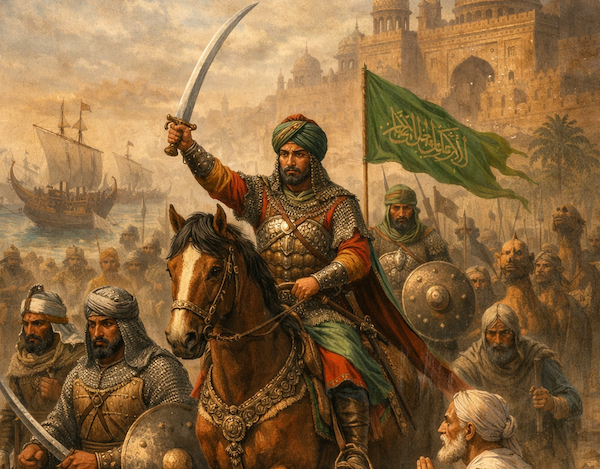
Before Islam, Arabs, initially as traders, entered the subcontinent peacefully. After islam started in Arab, Yazid ibn Mu’awiya ruled from 680 to 683 CE in Arab, he killed the family of prophet of Islam, his grandson and almost 72 members of his family. Yazid belonged to the Umayyad ruling family (the caliph’s lineage). Muhammad bin Qasim was the nephew (and son-in-law) of Al-Hajjaj ibn Yusuf. Al-Hajjaj was a powerful governor under the Umayyad Caliphate, serving later caliphs (after Yazid’s time).
The Arab Extremists Muslims formally conquered Sindh in 711 AD under the leadership of Muhammad bin Qasim, who established Sindh as Dar-ul-Islam and based governance on Sharia law. Many of the early converts were from lower Hindu castes. Hindu communities, unfamiliar with Christianity and restricted by their own customs—such as prohibitions on certain marriages—found Islamic practices appealing, leading to a gradual increase in conversions. Arab Islamic activities thus played an important role in the large-scale spread of Islam in the region. As historian Hitti notes, Islam evolved in three stages in the subcontinent: “originally a religion, later a state, and finally a culture.”
When some muslims support extremist groups today, they forget that Muhammad bin Qasim came from the same power-hungry Umayyad faction as Yazid, the ruler responsible for killing the grandson of Prophet of Islam and his family. Islam has 73 sects. Islamic sects allow males to have four marriages. There is also the tradition of “Mut’a” (temporary marriage). Some sects of Islam like Shia Muslims allow females to have up to eight temporary marriages, and some sects like wahabis allow marriages between a brother and a sister. They create such rituals to attract ungodly people and spread Islam. Muslims also believe that only one sect will go to heaven, while the majority of Muslims will go to hell. Therefore, different sects developed with different teachings. Thus, the invasion of Muhammad bin Qasim ushered in the spread of extreme Islamization in the subcontinent, particularly in Sindh (Pakistan) and Kabul (Afghanistan).
First major Muslim rulers in the subcontinent (1206)
The Delhi Sultanate was established in 1206 with Qutb-ud-din Aibak, a former slave and general of Muhammad Ghori, as its first Sultan. He was the first Muslim ruler to establish a lasting kingdom in northern India. Ibrahim Lodi ruled much later (1517–1526) as the last Sultan of the Lodi dynasty, which was part of the Delhi Sultanate. He was defeated by Babur in 1526 at the First Battle of Panipat, which led to the Mughal Empire.
Dynasties inside the Delhi Sultanate
- Mamluk (Slave) Dynasty – 1206–1290
- Khilji Dynasty – 1290–1320
- Tughlaq Dynasty – 1320–1414
- Sayyid Dynasty – 1414–1451
- Lodi Dynasty – 1451–1526
Total Sultans: about 35 rulers
Important rulers included: Muhammad bin Tughlaq, Qutb-ud-din Aibak,
Alauddin Khalji: His generals conquered Gujarat, Rajasthan, and parts of South India and Southern kingdoms paid tribute to Delhi. They Controlled: Most of Northern and Central India.
Mughal Emperor (1526–1530)
Ẓahīr-ud-Dīn Muhammad Babur was a conqueror born in Andijan, Timurid Empire (present-day Uzbekistan). Following setbacks in Central Asia, he established the Mughal dynasty in India after defeating Ibrahim Lodi at the First Battle of Panipat in 1526.
Babur faced rebellions in Fergana and lost Samarkand multiple times. In 1504, he conquered Kabul, later attempted to reclaim Central Asia, and finally turned his focus to India.
Aurangzeb (1658–1707)
Babur (1526–1530)
Humayun (1530–1540, 1555–1556): Babur’s son Humayun inherited the empire but faced instability. He was driven into Persia by Afghan and Rajput rebels and briefly lost the throne. Humayun regained the throne in 1555 but died in a fatal accident shortly after.
Akbar (1556–1605): Humayun’s son Akbar, under regent Bairam Khan, consolidated the empire. He established a centralized administration, pursued religious tolerance, and created a library of over 24,000 volumes. Akbar also founded Din-i-Ilahi, a syncretic religion blending Islam, Hinduism, Zoroastrianism, and Christianity, which was followed by some courtiers, including Birbal.
Jahangir (1605–1627)
Shah Jahan (1628–1658)
Aurangzeb (1658–1707): His empire stretched from Afghanistan to almost the southern tip of India. He controlled: About 90% of the Indian subcontinent.
Royal Harems and Female Captives
Present-day Muslims do not know that Islamic extremist groups killed their forefathers. Islamists also raped many women. Historical records show that rulers who entered the subcontinent kept hundreds or thousands of slave women. As the Muslim population grew, some extreme ideologies persisted.
Mahmud of Ghazni: Persian chronicles such as the Tarikh-i-Yamini report that he captured thousands of women and children during campaigns in India. Some historians estimate tens of thousands of captives in certain raids.
Alauddin Khalji: Court historian Amir Khusrau wrote that military campaigns brought large numbers of prisoners to Delhi. Chronicler Ziauddin Barani also mentions many female captives entering the royal court. Historians do not know the exact number of women in the royal harem.
Babur: In his memoir Baburnama, Babur describes royal households and harems but does not give precise numbers of slave women.
Akbar: Court historian Abu’l-Fazl ibn Mubarak wrote in Akbarnama and Ain-i-Akbari that the imperial harem contained thousands of women, including wives, servants, and concubines. Some estimates suggest around 5,000 women lived there.
Historians rarely record exact numbers of slave women. Some chronicles mention thousands of captives or large harems, but scholars treat these figures cautiously.
Taj Mahal & Cruelty (1631-1653)
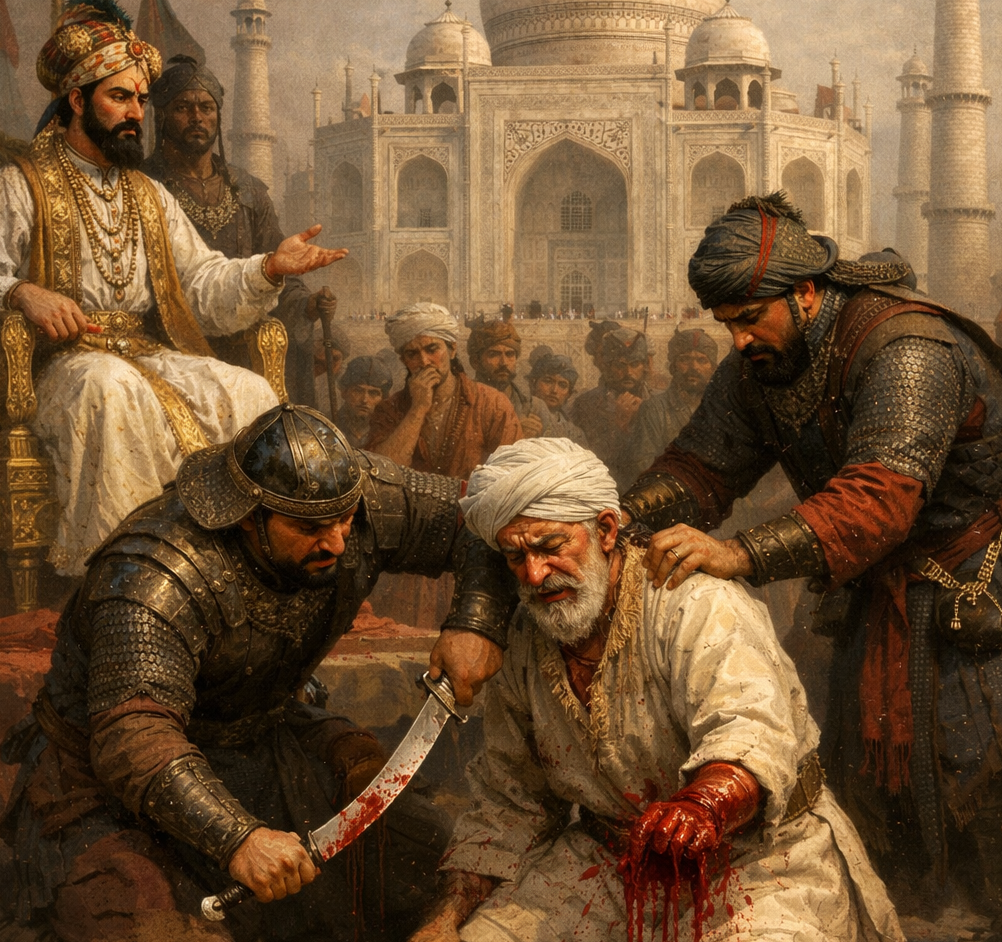
Shah Jahan commissioned the Taj Mahal in 1631 to honor his wife, Mumtaz Mahal, a Persian princess who died giving birth to their 14th child, Gauhara Begum. The tomb sits at the center of a 42-acre complex that includes a mosque and a guest house, set within formal gardens and enclosed on three sides by a crenellated wall.
Historians believe the complex was completed in 1653 at an estimated cost of 32 million rupees, roughly 52.8 billion rupees (US$827 million) in 2015. The construction employed about 20,000 artisans under a board of architects led by Ustad Ahmad Lahauri, the court architect. Shah Jahan ordered the right hand of the chief mason to be cut off so that the masterpiece could never be recreated. In 1983, UNESCO designated the Taj Mahal a World Heritage Site, calling it “the jewel of Muslim art in India and one of the universally admired masterpieces of the world’s heritage.”
Sikh Period (1799–1849)
The Sikh Period in the Indian subcontinent began with Maharaja Ranjit Singh, who founded the Sikh Empire in 1799 with its capital at Lahore. He expanded the empire across Punjab, parts of Khyber Pakhtunkhwa, and northern India, creating a strong, centralized state. Maharaja Ranjit Singh promoted religious tolerance, allowing Hindus, Muslims, and Sikhs to serve in his administration and army. He modernized the military and supported art and culture. The Sikh Empire lasted until 1849, when the British annexed it after the Second Anglo-Sikh War, ending Sikh sovereignty in the region.
British Trading and British Raj (1600-1947)
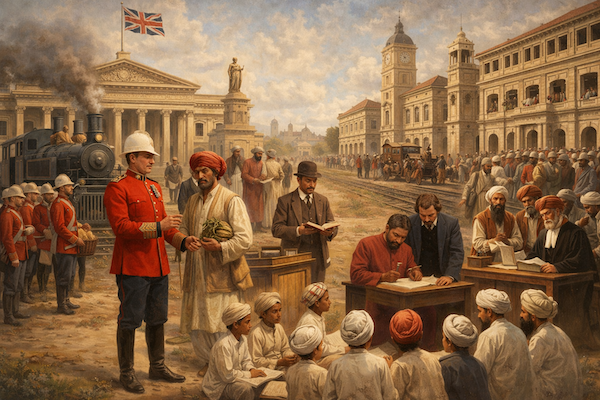
The British Raj and Its Rule
During the British Raj, a small number of British officials and troops—about 20,000—ruled over 300 million Indians. This tiny force suggests that many Indians either accepted or cooperated with British rule. Britain relied heavily on Indian princes, local leaders, and large numbers of Indian troops, police officers, and civil servants to maintain control.
The British introduced a legal and administrative system that made the subcontinent a center of world politics. Present-day India, Pakistan, and Bangladesh still follow much of this system. Before British rule, conflicts between religious groups sometimes led to violence, and powerful rulers could enslave women and oppress weaker people without legal restraint.
The British applied strict laws, discipline, and order to local leaders, princes, and administrators. They built government offices, schools for ordinary people, and civil institutions, laying the foundation for education, governance, and public administration across the subcontinent.
Arrival of the British East India Company
On December 31, 1600, Queen Elizabeth I of England granted a royal charter to the British East India Company, allowing it to trade with the East. Ships arrived in India in 1608 and docked at Surat in modern-day Gujarat.
In 1615, King James I sent Sir Thomas Roe as his ambassador to Emperor Jahangir’s court. They concluded a commercial treaty in which the Mughals allowed the Company to build trading posts in India in exchange for European goods.
Trade and Expansion
The Company traded commodities such as cotton, silk, saltpetre, indigo, and tea. By the mid-1600s, it had established trading posts—or “factories”—in major cities including Bombay, Calcutta, and Madras, in addition to its first factory at Surat, built in 1612.
First War of Indian Independence (1857)
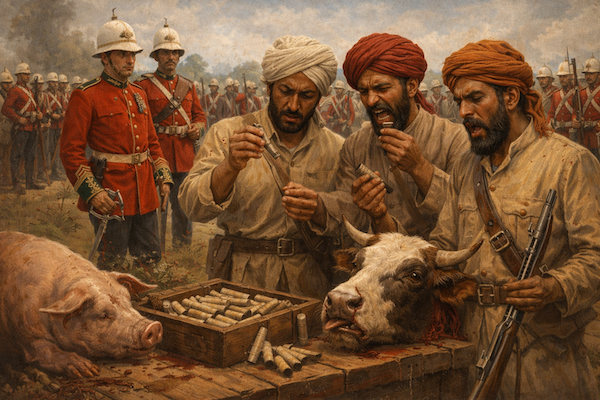
The Spark of Rebellion
The rebellion began due to a British blunder involving new cartridges for the Pattern 1853 Enfield rifle. These cartridges were greased with animal fat, rumored to include pig and cow fat. This offended both Muslim and Hindu sepoys, whose religious beliefs forbade contact with these substances. When the sepoys refused to use the cartridges, British officers provoked them further, leading to mutiny.
Outbreak in Meerut
On May 10, 1857, soldiers of the British Indian Army—known as “sepoys” (from Urdu/Persian sipaahi, meaning “soldier”)—rose against the British in Meerut, a cantonment 65 km northeast of Delhi. At that time, the Company’s army in India numbered 238,000, including 38,000 Europeans.
Indian soldiers marched to Delhi to offer their services to the Mughal emperor. Soon, much of northern and central India plunged into a year-long insurrection. Many Indian regiments and kingdoms joined the uprising, while some units and states continued to support the British and the East India Company.
Aftermath of the 1857 Rebellion
The rebellion marked a turning point in modern Indian history. In May 1858, the British exiled Emperor Bahadur Shah Zafar II (r. 1837–1857) to Rangoon, Burma (now Yangon, Myanmar). They executed most of his family to formally end the Mughal Empire. His three sons, who participated in the rebellion, were arrested and shot in Delhi by Major William Stephen Raikes Hodson of the British Indian Army.
Following the rebellion, the Viceroy announced that the British government would honor treaties with princely states and renounce the “Doctrine of Lapse,” which had allowed the East India Company to annex territories of rulers who died without male heirs. About 40% of Indian territory and 20–25% of the population remained under the control of 562 princely states, which represented diverse religious (Islamic, Hindu, Sikh, and others) and ethnic groups.
Development in the British Raj
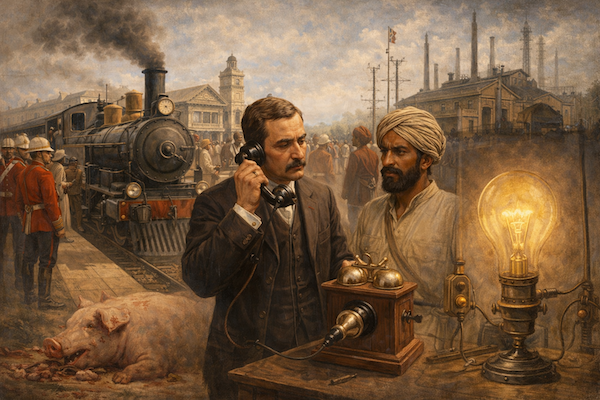
Industry
Before the British Raj, the Indian subcontinent had no electricity or electric bulbs; people lit homes, palaces, and streets using oil lamps, torches, and candles. During the British colonial period, major technological and industrial changes were introduced to the Indian subcontinent.
The East India Company established some of the earliest modern factories and industrial systems in the region during the 18th and 19th centuries. With the progress of the Industrial Revolution in Britain, new technologies began to reach India. Entrepreneur Jamsetji Tata began his industrial career in 1877 by founding the Central India Spinning, Weaving, and Manufacturing Company in Bombay. His efforts laid the foundation for India’s modern industrial sector.
The invention of the electric light bulb by Thomas Edison in 1879 helped accelerate the use of electricity worldwide. Under British administration, electricity generation and electric lighting were gradually introduced in major cities of the subcontinent such as Calcutta, Bombay, and Madras. These developments contributed to the modernization of infrastructure, including railways, telegraph systems, and urban lighting.
Railways
In the late 19th century, British India built a modern railway system, the fourth largest in the world. While British administrators, engineers, and craftsmen managed day-to-day operations.
Irrigation and Infrastructure
The British Raj invested heavily in infrastructure. They constructed canals, irrigation systems, roads, ports, and telegraph lines alongside the railways to support trade and governance.
Policies and Economic Integration
During the second half of the 19th century, the British Crown’s direct administration of India and the Industrial Revolution closely intertwined India’s economy with Great Britain’s. Railways, roads, canals, and bridges allowed raw materials, such as cotton, to move efficiently from India’s interior to ports like Bombay for export to England. Telegraph lines ensured faster communication across the subcontinent.
Electricity Sector
The first electric light demonstration in Calcutta occurred on July 24, 1879, conducted by P W Fleury & Co. On January 7, 1897, Kilburn & Co obtained the Calcutta electric lighting license as agents of the Indian Electric Co., registered in London. A month later, the company was renamed the Calcutta Electric Supply Corporation, which moved control from London to Calcutta only in 1970.
Mumbai first saw electric lighting in 1882 at Crawford Market. The Bombay Electric Supply & Tramways Company (BEST) built a generating station in 1905 to power trams. The first electric street light in Asia was lit on August 5, 1905, in Bangalore. The first electric train ran between Bombay’s Victoria Terminus and Kurla on the Harbour Line in 1925.
King Edward Medical University (1872)
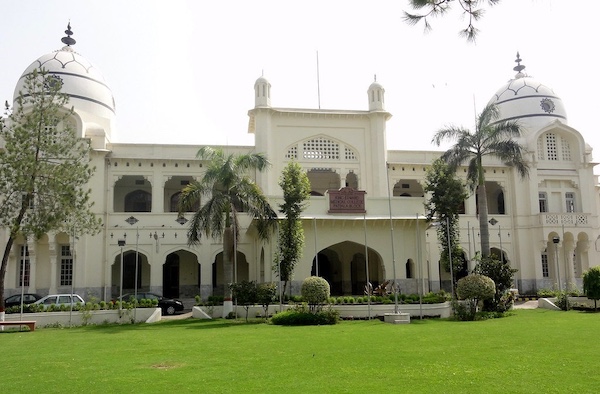
King Edward Medical College is the oldest educational institute and medical school in the sub-continent and in Pakistan. Mayo Hospital in Lahore, is the attached hospital, which was built in 1872 and was named after Lord Mayo. King Edward Medical University is supervising Seven Tertiary care hospitals in Lahore as its teaching Hospitals. It is the most preferred medical college in the public sector.
The first academic building was completed in 1883. On December 21, 1911, Lahore Medical College was renamed King Edward Medical College in Honor of the late King and Emperor and was elevated to the status of an independent, degree-granting university on May 12, 2005, when it became King Edward Medical University.
Beginnings of Self-Government
Early Steps in British India
The British took the first steps toward self-government in the late 19th century. They appointed Indian counsellors to advise the viceroy and created provincial councils that included Indian members. The British expanded Indian participation further with the Indian Councils Act of 1892.
They also established Municipal Corporations and District Boards for local administration. These bodies included elected Indian members, giving local people a voice in governance for the first time.
Religious Tensions and Political Unity
During the Islamic and Sikh periods, conflicts between Hindus and Muslims often led to violence. The Hindu and muslims hate each other, in Islamic and Sikh period, muslims killed hindus and hindus killed muslims. There was no unity between the Hindu and Muslim community of sub-continent. The lack of unity between these communities continued into the British era.
Muhammad Ali Jinnah, born in 1876, studied law in England 1892 and returned to India in 1896 as an enthusiastic liberal, joining the Indian National Congress. In 1913, he also joined the Muslim League, which had opposed the 1911 annulment of Bengal’s partition. Jinnah maintained dual membership until 1919. During this period, Congress leader Sarojini Naidu described him as the “ambassador of Hindu-Muslim unity.”
Partition and the Creation of Pakistan
Before leaving the subcontinent, the British divided the land to create peace between hindu and muslim communities. Initially, some Muslim religious leaders opposed Jinnah’s vision of a separate state for Muslims. Many Christian, Hindu, Qadyani, and Muslim leaders supported him in this mission to make a secular country.
On August 14, 1947, Pakistan was created as a secular state. Over time, different Muslim sects grew in influence, issuing fatwas and promoting their interpretations of Islam.
Vision of the Founder of Pakistan

Quaid-e-Azam, in his presidential address to the Constituent Assembly of Pakistan, said:
“You are free; you are free to go to your temples, you are free to go to your mosques or to any other place of worship in this State of Pakistan. You may belong to any religion, caste, or creed—that has nothing to do with the business of the State. Hindus would cease to be Hindus and Muslims would cease to be Muslims, not in the religious sense, but in the political sense as citizens of the State.”
The land of modern Pakistan has been home to leading civilizations for millennia. At independence on August 14, 1947, Pakistan inherited a rich national heritage. The Founder was a secular, educated man supported by Christians, Hindus, Muslims, Sikhs, and atheists—all united to fight for the rights of oppressed minorities in the subcontinent. From 1947 to 1956, Pakistan was not an Islamic Republic and was never intended to serve a single religion. Its name, ‘The Land of the Pure,’ symbolizes inclusivity, not religious dominance.
From Secular Vision to Extremist Influence
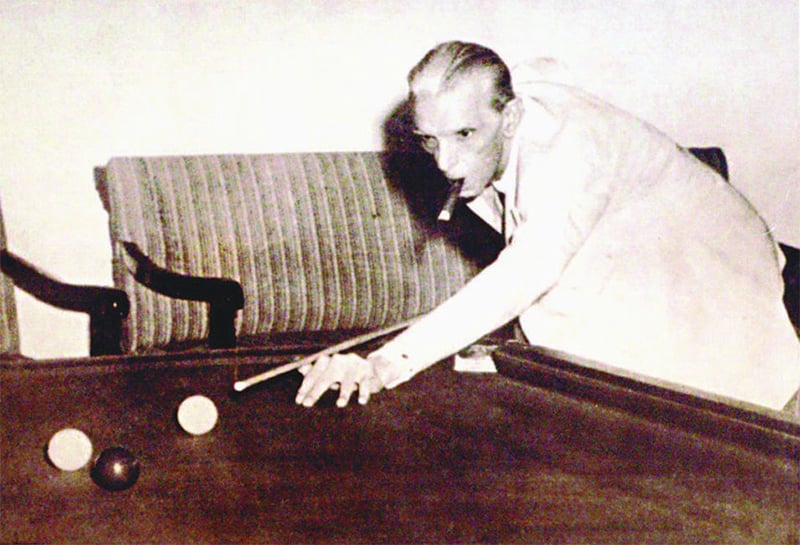
Pakistan’s Founding Vision
Pakistan was not created as a Muslim state; its founders envisioned a secular nation. It remained largely secular until extremist religious leaders, commonly called mullahs, gained political influence. These mullahs, often supported by extremist Islamic groups, have sought for decades to impose Sharia law across the country.
The Reality on the Ground
Pakistan has fought a long battle against Islamic terrorist groups, losing over 70,000 lives in the process. The country is home to more than 2.8 million Christians and followers of fifteen other religions. Yet global perceptions often focus on the extremists, portraying Pakistan as unmodern and unsafe for tourists. This distorted image suits extremist groups, who seek to control Pakistan politically and socially.
Extremism’s Historical Roots
Extremist ideology within Islam has a long history. Conflicts among Muslims date back centuries. For example, in 680 CE, Caliph Yazid I and his army killed Imam Hussain ibn Ali and his family at the Battle of Karbala. These internal conflicts show that extremist violence in the name of Islam began long before modern times.
Regional Challenges
Extremist groups have destabilized countries with rich civilizations, including Afghanistan, Syria, Iraq, Egypt, and Iran. After extremists seized power, they promoted corruption, hatred, and persecution of religious minorities. Unfortunately, some neighboring Muslim countries and extremists groups within Pakistan see Pakistan as a “fort of Islam” and attempt to exploit it for terrorism, affecting this generation of Pakistanis.
Army Public School Attack and the Rise of Militancy
From Secularism to an Islamic State
Pakistan was originally intended as a secular nation. At the time of Quaid-e-Azam Muhammad Ali Jinnah, Pakistan was governed under adapted British colonial laws and the Government of India Act 1935, which had been introduced by the British. The country operated with a provisional judicial setup until the formal establishment of the Supreme Court in 1956 under Pakistan’s first constitution. However, after General Zia-ul-Haq came to power in 1977, Pakistan gradually transformed into an Islamic state. Muslim politicians later created the Federal Shariat Court in 1980.
Zia-ul-Haq introduced judicial policies, including the blasphemy laws, which remain a threat to non-Muslims. He also empowered forces that later influenced extremist groups and undermined democratic institutions. Over time, some groups persecuted minorities, attacked churches, and carried out terrorist attacks in the name of Islam. Despite this, Pakistan’s heritage belongs to one of the oldest and most civilized civilizations in the world.
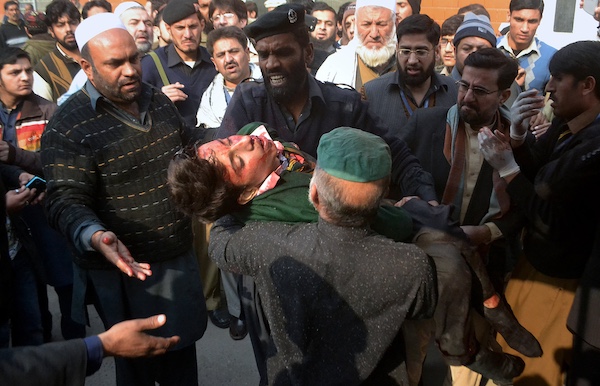
The Army Public School Attack

On December 16, 2014, six gunmen affiliated with the Tehrik-i-Taliban Pakistan (TTP) attacked the Army Public School. The militants, including one Chechen, three Arabs, and two Afghans, entered the school and opened fire on staff and students. They killed 149 people, including 132 children aged 8 to 18, marking it as the world’s fourth deadliest school massacre.
Militancy in Pakistan
After the 9/11 attacks in the USA, Al-Qaeda members tried to take control of Pakistan’s mountainous regions near the Afghan border, especially Waziristan. Waziristan had become a lawless area, once called “the most dangerous place in the world” by former U.S. President Barack Obama.
From 2014 to 2016, the Pakistan Army conducted a 22-month operation to remove militants from North Waziristan. About 500 soldiers died, roughly 3,400 militants were killed, and many fled to Afghanistan. Despite these efforts, extremist groups still run religious schools across Pakistan and recruit teenagers for terrorism.
Arabic Islamic Extremists’ Culture and Violence
Terrorism and Sectarian Violence
Today, Pakistan struggles with terrorism, corruption, bribery, nepotism, and mismanagement. Over 70,000 people have died in suicide attacks carried out by extremist groups. Sectarian violence is a serious issue, as Muslims from different sects sometimes attack each other. According to Islamic traditions, there are 73 sects of Muslims, and only one is considered to follow the correct path.
Religious Texts and Interpretation
Islamic texts have been interpreted by extremists to justify violence. For example:
- Hadith (Al-Tirmidhi 171): Prophet Muhammad (saws) said that his Ummah would experience the same evils that befell previous communities and would fragment into 73 sects, with only one in the right path.
- Quran 5:33: Punishes those who wage war against Allah and spread corruption.
- Quran 9:5: Discusses fighting polytheists during times of conflict, with conditions for mercy if they repent.
- Quran 33:52: Refers to women “possessed by the right hand” (slaves) during Prophet Muhammad’s time.
- Sahih Bukhari 9.140: Mentions Prophet Muhammad’s marriage to Aisha when she was 9 years old, highlighting historical practices regarding marriage age.
While these texts describe historical and religious rules, extremists have misused them to justify terrorism, persecution, slavery and oppression, including targeting schools, universities, minorities, and vulnerable groups.
Slavery, Oppression, and Attacks on Minorities
Extremist ideologies have promoted:
- Slavery of women and girls
- Suppression of freedom of speech
- Persecution of religious minorities
- Attacks on educational institutions, including the Army Public School, killing hundreds of children
These practices are linked to cultural influences brought from Arabic extremist interpretations, not the historical heritage of the region.
Pakistanis Fighting Terrorism
It is incorrect to label all 243 million Pakistanis as terrorists. Many Pakistanis have fought extremism and contributed positively to society. Notable examples include:
- Malala Yousafzai – education activist and Nobel laureate
- Nergis Mavalvala – renowned scientist
- Alvin Robert Cornelius – A Christian Believer – former Chief Justice of Pakistan
- Władysław Turowicz – A Christian Believer – Polish-Pakistani space scientist
- Abdul Sattar Edhi – social worker
- Abdus Salam – Nobel laureate
- Arfa Karim – technology prodigy
These peacemakers represent Pakistan’s true values, resisting terrorism and advocating for education, science, and human rights.
Pakistan Today
Militant activities have damaged Pakistan’s global image, associating it with terrorism. However, millions of Pakistanis live peacefully, preserving the country’s secular, cultural, and civilizational heritage. Pakistan remains diverse and welcoming, hosting other nations and cultures while continuing to resist extremist ideologies that threaten its stability and values.
A Message for Humanity
Reflection and Responsibility
There is a need for honest reflection in the subcontinent. Instead of responding with anger or extremism, we should learn to acknowledge history with maturity and gratitude where it is due.
The period of the British Raj introduced systems that continue to shape modern society—structured education, legal frameworks, railways, institutions, and administrative governance. Today, countries like Pakistan, India, and Bangladesh etc, still benefit from many of these developments.
At the same time, history—both before and after that era—includes conflict, war, injustice, slavery, and division across different rulers and communities. These are realities we must acknowledge, not to attack one another, but to grow beyond them.
The Role of Faith and Reform
It is also important to recognize that many of the reforms in governance, education, healthcare, and human dignity were deeply influenced by the moral and ethical framework of the Christianity. The teachings of Jesus Christ—centered on love, mercy, justice, and service—played a significant role in shaping the values that later influenced modern institutions and reforms in many parts of the world.
These advancements, such as education, healthcare, transportation, and technology, have benefited millions or billions of people across regions. All Inventors and scientists were believers of Christ, who followed the commandment of Jesus and served the human society.
Even Western societies were not always just or developed. They too passed through periods of tyranny and struggle. Transformation came gradually, as societies embraced principles of accountability, human dignity, and moral responsibility, values strongly rooted in Christian teachings.
Modern Reality and Self-Reflection
Today, many people from this region seek better opportunities in countries like United Kingdom, USA, Europe and Canada because of the systems and stability built over time. While those who want to go there, hate christians and christianity.
At the same time, we must also look within, vast majority hindu, budhhists and muslim countries, Even in the 21st century, divisions based on religion, sect, and social hierarchy continue to weaken societies. True progress cannot come without self-reflection, unity, and a commitment to higher values.
The message is not about blaming any group, but about recognizing truth and learning from it. Progress requires humility, discipline, and a willingness to change.
At the heart of real transformation is a simple truth:
We are one human family.
If we truly seek a better future, we must rise above hatred, reject division, and embrace values that uplift all humanity—justice, respect, and love. These are the principles that build strong nations and a peaceful world.
We, as believers in the God of Abraham, Isaac, and Jacob, are called to love all humanity and to serve all people without discrimination. The teachings of Jesus Christ remind us that love, mercy, justice, and compassion are the foundation of a righteous life.
The message of Christ calls us higher, not to hatred, but to transformation. It calls us to forgive, to uplift, to educate, and to serve. True faith is not proven by words, but by actions that bring peace, unity, and الخير (goodness) to all people.
Today, people from every nation seek better lives, peace, and opportunity. This shows a universal desire for stability, justice, and human dignity. Rather than criticizing, we should work together to build a world where these values are accessible to all.
Let us not live in hypocrisy, benefiting from progress while refusing to acknowledge the importance of those who introdcued this all to us and worked for unity, discipline, and moral responsibility. At the same time, let us remain humble, knowing that all good ultimately comes from God, our Creator and through His Messiah.
The future of humanity depends on one simple truth:
We must learn to love one another as one family.
Let us rise above division, reject hatred, and walk in the light of truth. Let us become people who serve, uplift, and bring hope—just as we are called to do.